
The buying question
Scarf and shawl decisions are often made from a catalogue name, a single photo or a target price. A stronger brief starts with the look profile, wearing conditions, market, size coverage and the reason the scarf and shawl product exists. For maxi scarf and shawl drape, movement and packaging planning, the first job is to write down the assumptions that a supplier must confirm.
Scarf and shawl decisions are often made from a catalogue name, a single photo or a target price. A stronger brief starts with the look profile, wearing conditions, market, size coverage and the reason the scarf and shawl product exists. For maxi scarf and shawl drape, movement and packaging planning, the first job is to write down the assumptions that a supplier must confirm. The purpose is to give brand, sourcing and quality teams a shared record that remains useful when the first order becomes a repeat order.
What to specify
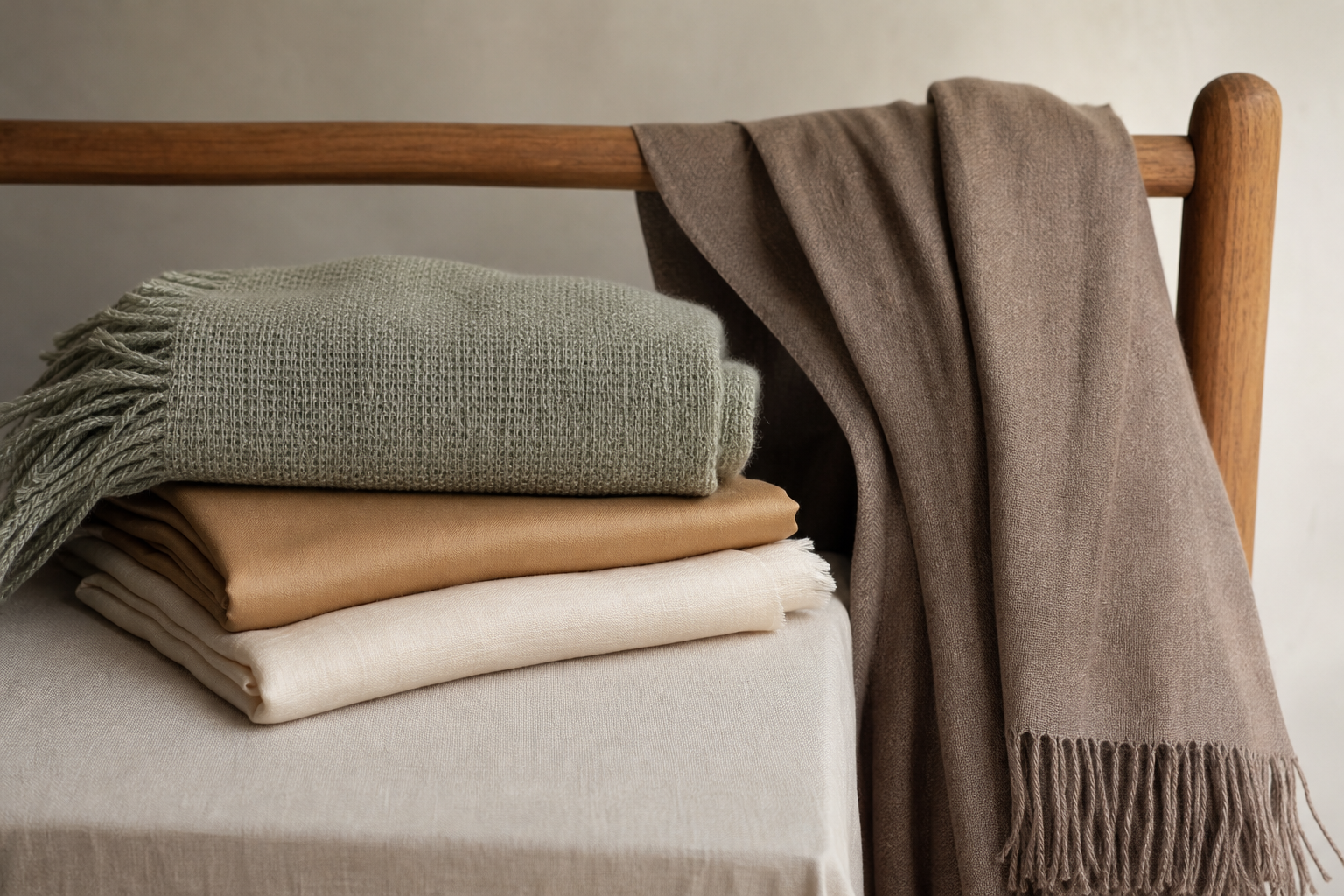
Specify the scarf or shawl format, finished length and width, fabric weight, fibre composition, weave or knit construction, colour reference, edge finish, fringe, label position and packaging. For online sales, prepare a dimension diagram, close-up texture images and fibre-specific care instructions alongside the sample. Compare quotations using the same specification sheet.
Specify the scarf or shawl format, finished length and width, fabric weight, fibre composition, weave or knit construction, colour reference, edge finish, fringe, label position and packaging. For online sales, prepare a dimension diagram, close-up texture images and fibre-specific care instructions alongside the sample. Compare quotations using the same specification sheet. The purpose is to give brand, sourcing and quality teams a shared record that remains useful when the first order becomes a repeat order.
Material and construction
Material names are a starting point. Ask for composition, weight, finish, recovery, pilling risk, shade tolerance and assembly and display care. Construction should state seam allowance, stitch detail density, bartacks, zipper or snap type, reflective placement and the points that touch the buyer. A supplier can then flag substitutions before they become a production surprise.
Material names are a starting point. Ask for composition, weight, finish, recovery, pilling risk, shade tolerance and assembly and display care. Construction should state seam allowance, stitch detail density, bartacks, zipper or snap type, reflective placement and the points that touch the buyer. A supplier can then flag substitutions before they become a production surprise. The purpose is to give brand, sourcing and quality teams a shared record that remains useful when the first order becomes a repeat order.
Fit and size
Scarf and shawl dimensions should match the intended wearing style and sales channel. Record finished length and width, fringe length, fabric weight and allowable dimensional variation. Approve a representative size and colour set, then log each change against the sample revision. For shrinkage-sensitive fabrics, agree the care method and dimensional-change test before bulk approval.
Scarf and shawl dimensions should match the intended wearing style and sales channel. Record finished length and width, fringe length, fabric weight and allowable dimensional variation. Approve a representative size and colour set, then log each change against the sample revision. For shrinkage-sensitive fabrics, agree the care method and dimensional-change test before bulk approval. The purpose is to give brand, sourcing and quality teams a shared record that remains useful when the first order becomes a repeat order.
Quality and evidence
Separate working defaults from evidence. Incoming fabric, shade, dimensions, seam security, closure function, trim attachment, labels and packaging should each have an owner. The selected partner and destination market determine the final inspection scope, so the page should explain the question and the requested file rather than invent a universal certificate.
Separate working defaults from evidence. Incoming fabric, shade, dimensions, seam security, closure function, trim attachment, labels and packaging should each have an owner. The selected partner and destination market determine the final inspection scope, so the page should explain the question and the requested file rather than invent a universal certificate. The purpose is to give brand, sourcing and quality teams a shared record that remains useful when the first order becomes a repeat order.
Cost and commercial handoff
Landed cost is affected by fabric yield, trim count, packaging, mixed carton rules, sample revisions and inspection. Ask for a costed bill of materials and define what changes the price. Keep the approved sample, measurement file, color reference and packaging file together so a reorder does not restart the conversation.
Landed cost is affected by fabric yield, trim count, packaging, mixed carton rules, sample revisions and inspection. Ask for a costed bill of materials and define what changes the price. Keep the approved sample, measurement file, color reference and packaging file together so a reorder does not restart the conversation. The purpose is to give brand, sourcing and quality teams a shared record that remains useful when the first order becomes a repeat order.
Buyer worksheet
Before requesting a quote, prepare: target market; buyer look profiles; size range; material route; color count; trims; logo method; labels; packaging; quantity by size and color; sample deadline; target shipping mode; required documents; inspection owner; and reorder assumptions. This list is more useful than a generic request for the lowest unit price.
Before requesting a quote, prepare: target market; buyer look profiles; size range; material route; color count; trims; logo method; labels; packaging; quantity by size and color; sample deadline; target shipping mode; required documents; inspection owner; and reorder assumptions. This list is more useful than a generic request for the lowest unit price. The purpose is to give brand, sourcing and quality teams a shared record that remains useful when the first order becomes a repeat order.
Common mistakes
Frequent mistakes include using a fashion size label without body measurements, approving a fabric without assembly and display care review, adding trims that can detach, comparing different packaging assumptions, and changing a closure after the size set. A short decision log prevents these gaps from moving downstream.
Frequent mistakes include using a fashion size label without body measurements, approving a fabric without assembly and display care review, adding trims that can detach, comparing different packaging assumptions, and changing a closure after the size set. A short decision log prevents these gaps from moving downstream. The purpose is to give brand, sourcing and quality teams a shared record that remains useful when the first order becomes a repeat order.
FAQ
Can the same pattern cover every look type? Usually it needs a measured range and sometimes separate blocks. Does water-resistant mean waterproof? Ask for the finish, seam treatment and stated test boundary. Can packaging be changed after sampling? It can, but it should trigger a new pack-out and cost review.
Can the same pattern cover every look type? Usually it needs a measured range and sometimes separate blocks. Does water-resistant mean waterproof? Ask for the finish, seam treatment and stated test boundary. Can packaging be changed after sampling? It can, but it should trigger a new pack-out and cost review. The purpose is to give brand, sourcing and quality teams a shared record that remains useful when the first order becomes a repeat order.
Next step
Send the product family, market, buyer look profiles, quantity plan and any reference images through the LOOMVEIL RFQ worksheet. The response should return missing questions, a sample gate and the evidence path for the selected partner.
Send the product family, market, buyer look profiles, quantity plan and any reference images through the LOOMVEIL RFQ worksheet. The response should return missing questions, a sample gate and the evidence path for the selected partner. The purpose is to give brand, sourcing and quality teams a shared record that remains useful when the first order becomes a repeat order.